
Disrupt or Be Disrupted: How AI Is Forcing Everyone to Reinvent

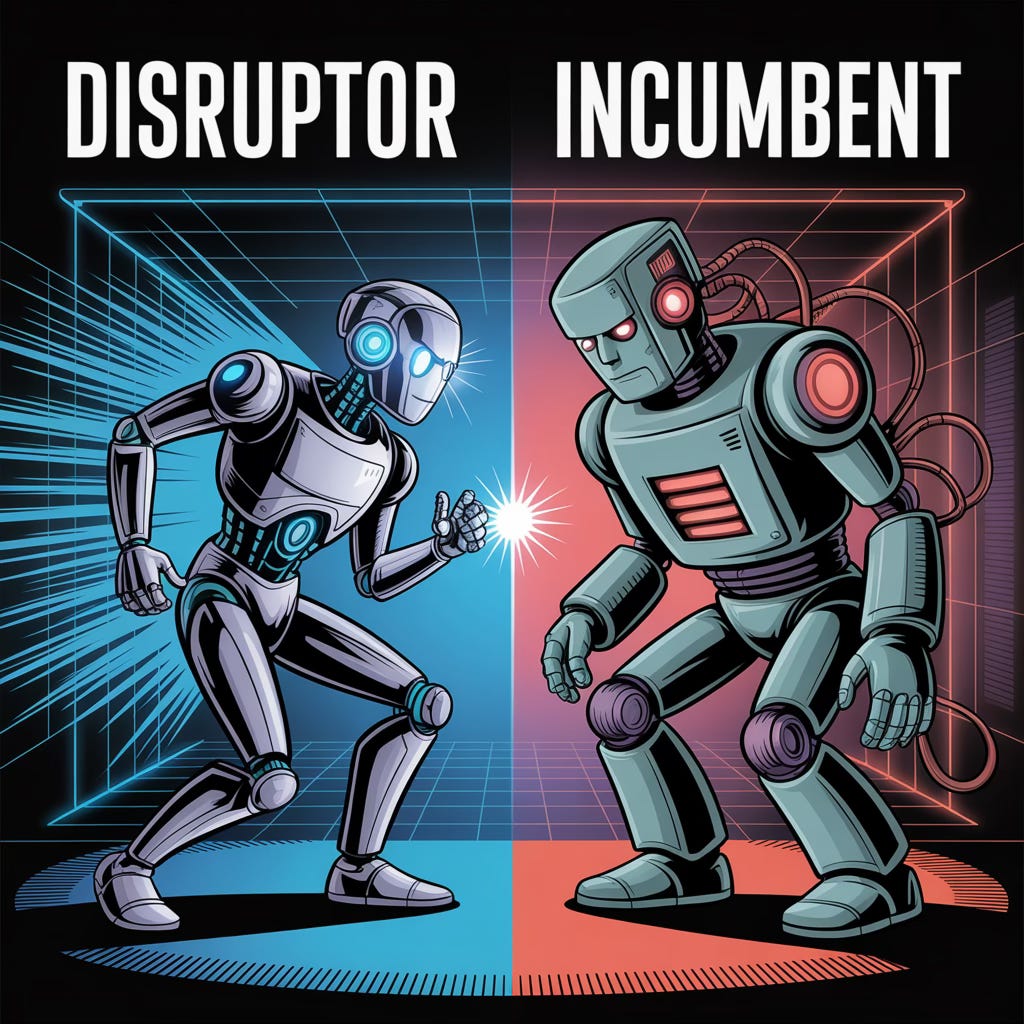
The other day, while reflecting on today’s business transformations, it struck me: most of the headlines in my news feed were dominated by the “Magnificent 7” and the top AI vendors (mostly “private” companies)—a narrow slice of the broader landscape of businesses, products, and executives.
Then I came across Howie Liu, CEO of Airtable, who had a recent wake-up moment. He realized his company (founded in 2012, launched in 2013, secured a $3 million Series A in February 2015, and since has raised a total of $1.36 billion across multiple rounds) was no longer the disruptor in the spreadsheet space—it was becoming the incumbent. So, he pivoted … fast. Airtable launched an AI-Agents and AI-powered app builder, fueled by what Liu called a “profound sense of paranoia.”
Why Paranoia Is A Viable New Strategy
Andy Grove, the legendary CEO of Intel, in 1996 wrote that only the paranoid survives. (I strongly recommend reading his book.) His point wasn’t about fear for its own sake, but about vigilance—the constant awareness that markets shift, technologies evolve, and competitors emerge when least expected. For Grove, paranoia meant a healthy sense of urgency: questioning assumptions, scanning the horizon for weak signals of change, and being willing to disrupt your own business before someone else does. In the fast-moving world of technology and business, complacency is the real enemy, and survival belongs to those who are alert, adaptive, and relentlessly prepared.
Perhaps if Intel’s later CEOs and executives had read his book and heeded Andy’s prescient advice, the company wouldn’t be facing the challenges it struggles with today.
Paranoia is, therefore, justified. In the AI era, the rules of the game have changed:
Change is Constant: Markets, technologies, and competitors shift rapidly—leaders must anticipate the unexpected.
Speed is Fleeting: Time-to-market no longer guarantees an advantage.
Moats are Shallow: Intellectual property alone rarely provides lasting protection.
Domain Expertise Decays: Industry knowledge and specialized skills lose their edge over time.
It follows that you must:
Watch the Weak Signals: Early indicators of disruption often appear before the obvious shifts.
Disrupt Yourself: Reinvent your business before competitors do it for you.
AI enables new and legacy players alike to build faster, iterate quicker, and scale smarter—eroding traditional barriers and leveling the playing field overnight.
Who’s Reinventing—and How
A bit of research uncovered how some major players are reshaping themselves to stay relevant:
Thomson Reuters kicked off its “Get Fit” program to go cloud-first and infuse generative AI into tools like Westlaw Precision.
Verily (Alphabet’s health-tech arm) is moving away from Google Cloud to stand alone as an AI-first healthcare company.
IgniteTech let go of 80% of its staff in 2023 to go all-in on AI—now running lean with 75% profit margins.
Commonwealth Bank of Australia tried replacing call centers with AI, but reversed some layoffs under union pressure—still pushing ahead, just more cautiously.
Meanwhile, strategy giants are ringing the alarm: Bain, McKinsey, and BCG say it plainly: “AI winners won’t just add tech—they’ll redesign their entire business model around it.”
The New Corporate Playbook
The age of AI is flipping the script:
Disruptors are becoming incumbents.
Incumbents are learning to disrupt again.
Old insulation—brand power, distribution, proprietary tech—isn’t enough anymore.
Survival belongs to those who can evolve with urgency, rethink everything, and disrupt themselves before someone else does.
Grove’s comment on paranoia is always a good parable, but especially now